
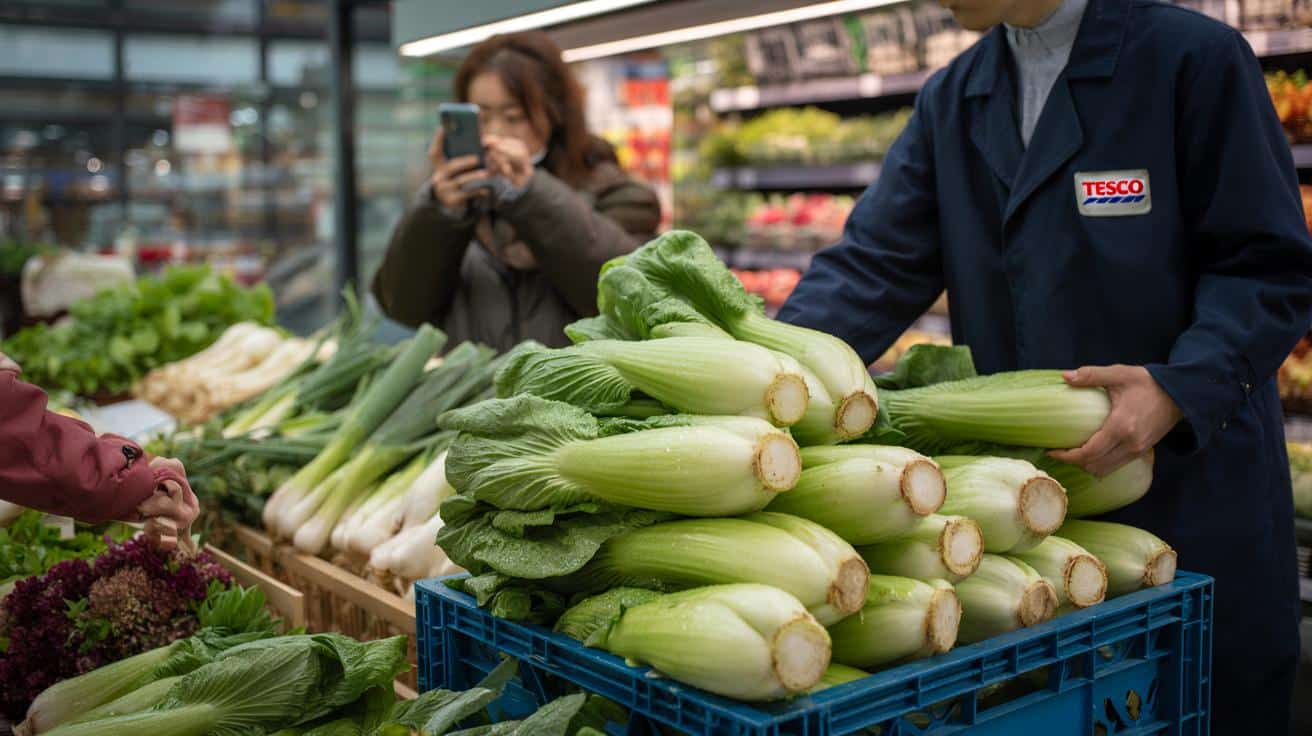
Shifts in home cooking, TikTok recipes, and a growing appetite for East‑Asian flavours have created a quiet queue for something crunchier than lettuce and more versatile than celery. Tesco has listened — and it’s making room.
I watched it happen on a drizzly Tuesday in north London, just after the post‑work rush began. A staff member rolled a blue crate down the produce aisle and set out long, pale-green stems with frilly tops, the kind of vegetable that makes you pause before reaching for the familiar. A curious shopper leaned in. “What’s that?” she asked. “Celtuce,” came the answer, with a smile, “sometimes called stem lettuce — good raw or in a hot pan.” Phones came out. People snapped. A couple asked how to cook it, then took two, “just to see.” The leaves looked delicate; the stalks looked like they’d snap clean. Every few minutes, someone else stopped. It sold out by noon.
What’s really changing on Tesco shelves
Tesco is introducing celtuce across selected larger stores and online, responding to customers who’ve been hunting for new textures and lighter ways to cook. The vegetable looks like lettuce on top, but the prize is the stem: crisp, pale, and quietly sweet. **The retailer says it has seen steady growth in demand for Asian greens and “new veg” over the past two years, enough to justify giving celtuce real space.** Expect loose stems at first, then pre-trimmed options if uptake stays strong.
The chain will begin with a trial in urban postcodes — London, Birmingham, Manchester — where recipe searches spike and chefs are already playing with the ingredient. On social feeds, videos tagged to celtuce are clocking up millions of views, from shaved ribbons in sesame oil to blistered batons with garlic. One Hackney home cook told me she started with a half-stem “in case it was weird,” then went back for more after a five-minute stir‑fry that reminded her of crunchy cucumber, but warmer and nutty. We’ve all had that moment when a new ingredient feels risky — until it doesn’t.
So why celtuce, and why now? British kitchens are in a texture era: people want crunch, char, and speed without the heaviness of cream or long braises. Celtuce fits the brief. It cooks fast, plays well with pantry flavours, and stretches across salads and hot dishes. For Tesco, it’s also a supply win: growers can raise it in cooler months, and UK trials have shown promising yields. There’s a value angle, too — one stem feeds two to three portions, and nothing much goes to waste if you prep it right.
How to buy, store and cook celtuce like you already knew it
Start with feel. You want a firm stem that’s heavy for its size, with leaves still perky. At home, trim the leafy tops (use them like a peppery lettuce) and slice the base. Then peel. The outer skin is tough; keep going until you see paler, jade flesh. From there, go two ways: thin ribbons shaved with a peeler for a lemony, raw crunch; or chunky batons tossed into a hot pan for 3–4 minutes with oil, garlic, and a pinch of salt. Heat brings out a gentle nuttiness.
The most common mistake is under‑peeling, which leaves tough strings and gives a false first impression. Don’t drown it, either. Too much sauce hides the clean snap you’re after. And don’t hover — high heat, quick toss, off the flame. *Let the pan do the work.* Season simply: salt, a squeeze of citrus, maybe toasted sesame or crushed pepper. Let’s be honest: nobody really does that every day. But on a weeknight, this is as close as it gets to effortless.
“We kept hearing the same thing from shoppers: they wanted something new that wasn’t a faff,” says a Tesco produce buyer involved in the rollout. “Celtuce lands right in that sweet spot — familiar enough to try, different enough to feel fun.”
To make it even easier, here’s a tiny playbook you can screenshot on your way to the store:
- Pick firm stems; skip any that feel spongy.
- Trim leaves for salads; peel the stem generously.
- Raw: shave, salt lightly, add lemon and olive oil.
- Hot: sear in a slick of oil, finish with soy and sesame.
- Leftovers: chill batons, splash with rice vinegar for tomorrow’s lunch.
What this small change says about how Britain is eating
This isn’t just about one vegetable sneaking into your basket. It’s a sign of how quickly home cooks adapt when the right ingredient shows up in the right place. Big retailers don’t take shelf space lightly, and giving celtuce a slot signals confidence that people want light, bright, quick food that still feels satisfying. It hints at a broader shift away from beige comfort towards green, crisp, and fast.
There’s also a quiet inclusivity at work. Shoppers who grew up with celtuce can now find it in a mainstream aisle, not just a specialist store miles away. New cooks get an accessible gateway to East‑Asian techniques without hunting down an obscure market. **When a supermarket makes that bridge, dinner can feel a little more imaginative — and a lot less complicated.** You try something once, it works, and a small door to new flavours stays open.
Will celtuce become the new broccoli? Probably not. That’s not the point. What matters is the nudge: a low‑risk invitation to play with texture, to swap a side salad for a bright plate of shaved stem and lemon, to stir‑fry something green that’s not a bag of the usual. Food tastes evolve in tiny, practical steps. One stem at a time.
| Point clé | Détail | Intérêt pour le lecteur |
|---|---|---|
| Tesco adds celtuce | Trial in selected larger stores and online, with potential wider rollout | Know where and when to find it without a wild goose chase |
| How to prep | Trim leaves, peel outer skin deeply, eat raw as ribbons or hot in batons | Skip the learning curve and avoid common mistakes |
| Why it’s trending | Crunch, speed, and crossover with East‑Asian flavours; good value per stem | Decide quickly if it fits your weeknight cooking style |
FAQ :
- What does celtuce taste like?Think of a mild lettuce crossed with cucumber and a whisper of celery. Raw, it’s clean and crisp. Cooked quickly, it turns tender‑crunchy with a nutty edge.
- How much will it cost?Pricing will vary by store and season, but expect it to sit near premium greens rather than specialty imports. One stem usually covers two generous sides.
- Can I eat the leaves?Yes. The leaves are slightly peppery and great in salads or wilted at the end of a stir‑fry. The stem is the main event, but nothing needs to be wasted.
- What’s the best way to store it?Keep it in the fridge, unwashed, wrapped lightly in paper inside a bag. Use within three to five days for peak crunch.
- Do I need any special kit to cook it?No. A peeler, a sharp knife, and a hot frying pan will carry you. If you own a mandoline, it makes paper‑thin ribbons in seconds.








Celtuce at Tesco? Finally! Been hunting it since seeing it on TikTok. Any idea which London stores have it this week?
So it’s like lettuce that went to the gym and became a stem snack? Count me in 🙂 How much per stem rougly, and do the leaves taste peppery as claimed?