
A smartphone clip shows a puppy with one oversized paw, puffed like a little mitt, booping the floor as she tries to stand. People call it cute. The truth sits between the pixels: a life on pause, waiting for a hand, a vet, a lift.
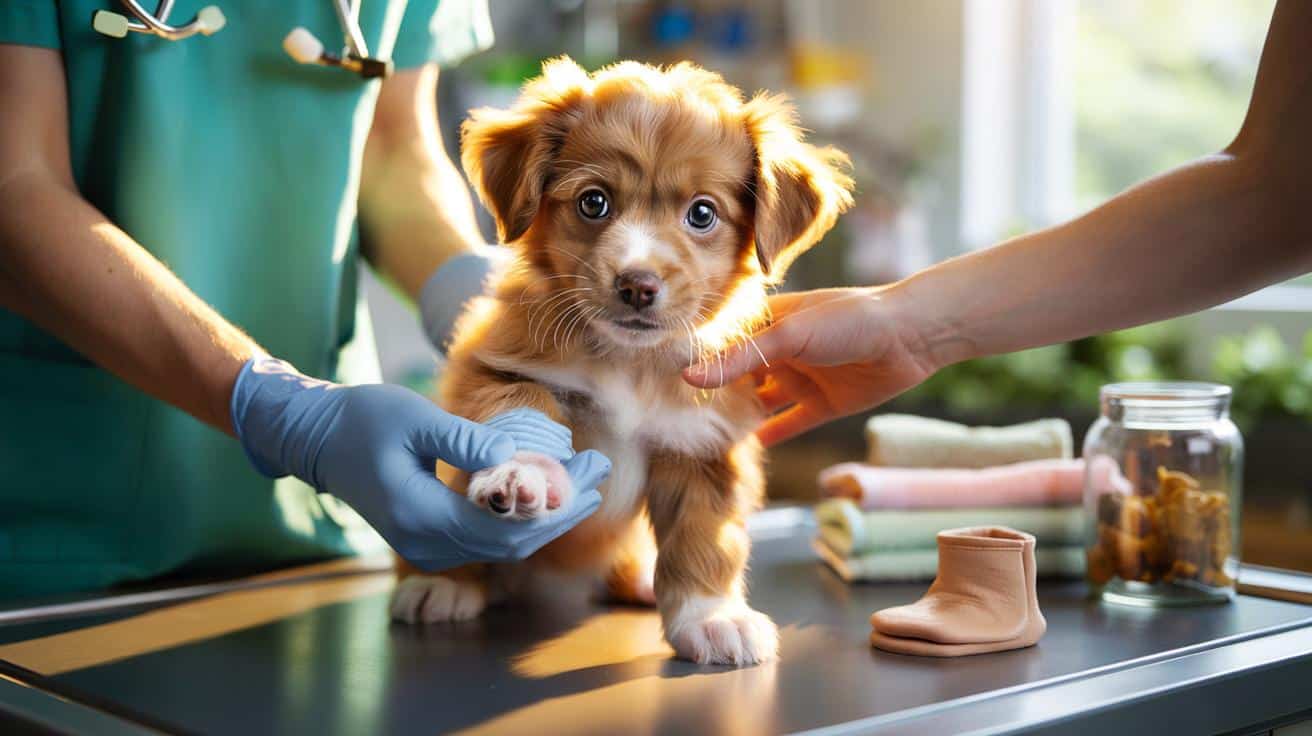
The first time I saw her, the clinic lights were too bright for a creature that small. A nurse unfolded a towel and there she was — caramel fur, moon-round eyes, and one paw so swollen it made a soft thud when it met the table, like a glove dropped after a fight. You could smell antiseptic and biscuits. A foster kept whispering her name, Fig, like an apology. Fig tried to stand and toppled, then tried again, lip quivering, determined in that stubborn puppy way. The camera caught it from the corner, the usual viral angle. The culprit was smaller than a coin.
A paw like a glove, and the internet held its breath
On screen, the “boxing-glove paw” looked almost cartoonish. In person, it was pressure and heat and effort. Swelling makes a shape of its own, rounding the corners of a limb until it stops looking like bone and starts looking like a soft toy. There’s a weird rhythm to it too: tap, wobble, breathe. People online sent hearts and wow-emoji. In the room, Fig sent little whines, impatient but game. That’s the sound of a young body asking for a way back.
Fig was found in a cardboard fruit tray behind a supermarket, tucked into a hoodie like a borrowed heartbeat. At first glance the paw seemed funny, like a baby wearing a mitten two sizes too big. Then a vet flipped the limb and everyone went quiet. A thin ligature line scored her wrist — the kind you see after an elastic or thread has bitten deep. They sedated her, lifted fur, and revealed a band so fine it had vanished under skin. It snapped with a sigh. The paw didn’t shrink in a second; healing is shyer than that. But the room eased.
Here’s what that “glove” often means. When something constricts a limb, blood can still push in, yet fluid and lymph can’t travel out. Pressure builds. Tissues swell, nerves complain, and cells start queueing for oxygen they can’t quite reach. Puppies are tiny hydraulics: a small blockage becomes a big drama. Remove the constriction and you don’t get magic — you get a new beginning. The body drains in slow motion, the way a sponge does after a storm, and sensation returns like a radio finding signal.
Care that looks ordinary, but works like a miracle
The routine began the next morning, quiet as a whisper. Warm compresses, checked by touch, not guess. Short sessions of gentle massage, fingertip to elbow, always toward the heart. Antibiotics on schedule, anti-inflammatories when prescribed, and a little bootie to stop her chewing at the stitches. Walks were timed like tea: two minutes, then four, then six, on smooth floors. Progress looked like tiny circles by the water bowl. It felt like a choir.
A lot can go sideways with swollen paws, and most of it is fixable with calm. Don’t wrap too tight; you’re trying to protect, not strangle. Skip the ice packs unless your vet asks — cold can numb and still harm. Watch colour and warmth: pink and cosy beats purple and cold. Keep play low and happy, not wild. You’ll miss a dose or a minute sometimes. Let’s be honest: nobody does that every day. You start again at the next bell.
We’ve all had that moment when a small life looks at you like you’re the whole world.
“We didn’t chase a miracle,” the vet told me, half-smiling. “We just gave her body permission to do what it already knew.”
- Look for red grooves, odd smells, or sudden swelling — they’re not cosmetic.
- Measure progress by comfort: easier steps, warmer naps, brighter eyes.
- Keep sessions short and kind. The goal is trust, not speed.
- Take photos. Healing hides in tiny changes you’ll miss in the moment.
What this tiny fighter teaches us
Fig’s paw didn’t shrink overnight, yet every day a new edge appeared where the puff had been. She learned to plant evenly again, first with a wobble, then with an almost-dance. The internet loved the before-and-after, the classic glow-up. What stuck in the clinic was quieter: how many hands it took to get there, how many eyes watching for heat, for colour, for the way her toes splayed or held. It looked absurdly cute until you saw the raw red groove around her wrist.
Stories like this aren’t about pity. They’re about focus. A vet with steady hands. A foster counting out pills under a kitchen lamp. A stranger who bends to check a box instead of walking past. That chain is the real headline. When we notice what’s small — a thread, a groove, a funny gait — lives pivot. And a pup with a “boxing-glove paw” becomes a sprinting shadow at golden hour, snout to wind, trying to catch a smell before it fades.
There’s one frame from Fig’s video I can’t forget. She puts weight on the once-mitten paw, pauses, and then looks up as if to ask if this is allowed. Of course it is. It always was. Healing is just a set of permissions given, repeated, and believed. Share the clip if you like. Share the checklist too. Somewhere, another little fighter is waiting for a hand to lift the towel, and a soft voice to say her name. The rest is patience, and a touch of luck.
| Point clé | Détail | Intérêt pour le lecteur |
|---|---|---|
| Spot the signs early | Swelling, heat, red grooves, chewing at the limb | Know when a “cute puff” is a medical red flag |
| Simple care works | Warm compresses, gentle drainage massage, short walks | Practical steps you can use at home between vet visits |
| Community saves lives | Rescuer, vet, foster, and updates that travel | Why sharing and showing up changes outcomes |
FAQ :
- What does “boxing-glove paw” actually mean?It’s a nickname people use for a severely swollen paw that looks oversized and rounded, like a padded glove. The swelling can be from a constriction, infection, injury, or an allergic reaction.
- How long can it take for swelling to go down?Once the cause is removed or treated, visible reduction can start within days, though full recovery may take weeks. Puppies heal fast, but they still need time.
- When should I see a vet for a swollen paw?Right away if you spot a deep groove, colour changes, cold toes, strong odour, or if the puppy avoids weight-bearing. Those are not “wait and see” signs.
- Can I help at home while waiting for the appointment?Keep the puppy calm, prevent licking, and keep the area clean and dry. Avoid tight wraps and DIY ice marathons. Gentle matters.
- Did Fig find a family?Yes — after her strength returned, she went to a foster-to-adopt home that kept up her routine. The last frame shows her on a sofa, one paw tucked, finally **home at last**.


That pause before she trusts the paw again—goosebumps. Fig is a tiny titan.