
A new wave of research says your bathroom rhythm is a loud, daily broadcast of your wider health, from mood and metabolism to sleep and stress. Your poop schedule is data. And it’s more revealing than you think.
It’s 7:22 a.m. The kettle clicks, the toast pops, and somewhere in the background a nervous system wakes up. In my flat, the morning soundtrack includes a familiar shuffle to the bathroom, the kind you could set a clock by. There’s a brief scroll through the news, a cough from the neighbour, and that quiet, slightly awkward relief that never makes it to Instagram. We live by rituals, but few are as honest as this one.
We’ve all had that moment when a trip abroad or a tough week throws the body off, and you’re waiting for things to move like a delayed train. It messes with your head. And it might be telling you something bigger.
What your toilet timing says about the rest of you
Your bowels keep time with your body clock. Most healthy people feel the urge in the morning thanks to a surge of cortisol, breakfast, and the gastrocolic reflex nudging the colon into action. If you tend to go at roughly the same time each day, your internal rhythms — sleep, stress hormones, autonomic balance — are often in sync. Drift far off that rhythm for weeks and it can echo elsewhere: sluggish energy, low mood, scratchy sleep, even cloudy focus between meetings.
Researchers tracking transit time and stool patterns across large populations keep spotting the same story. The “3 and 3 rule” — anywhere from three times a day to three times a week — still covers most healthy adults. Yet regularity within your personal range matters. People with steady, predictable bowel habits tend to report better energy, fewer sugar crashes, and more consistent sleep. *Your gut loves a groove.* Sudden changes — say, a sharp shift from morning to late-night trips — often follow spikes in stress, hectic travel, or a new medication.
The science is getting sharper. Transit time links closely to the mix of bacteria in your gut, and that microbiome is tied to metabolism, inflammation, even mood. When the colon moves too slowly, stool sits longer, water is drawn out, and microbes produce different by-products that can leave you bloated, irritable, and constipated. When it races, nutrients slip through and you risk dehydration, cramps, and diarrhoea. **In both directions, your schedule is a window into how well your nervous system and gut are talking to each other.** It’s like checking the tide to understand the weather.
How to tune your “poop clock” without turning life into a spreadsheet
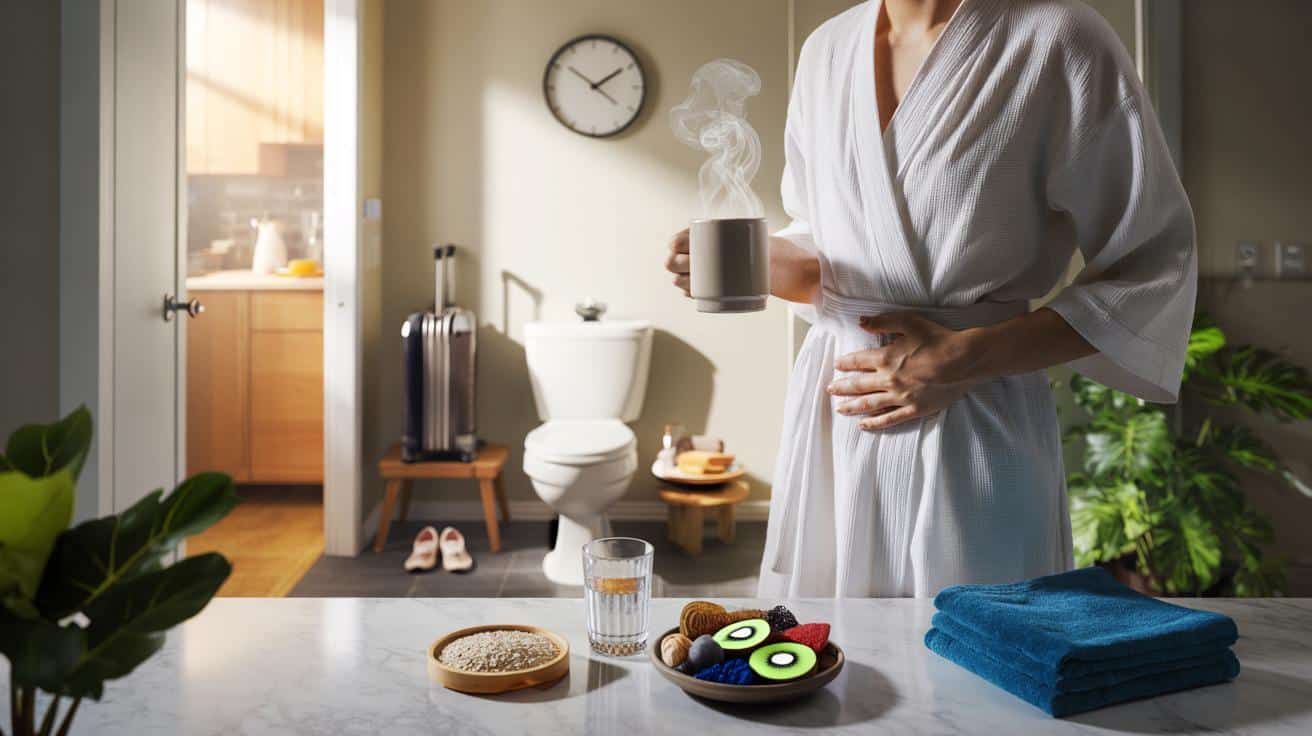
Anchor one daily window. Pick a consistent 10–15 minute slot, often after breakfast or coffee, and sit without rushing. A warm drink, some gentle movement, and a few relaxed belly breaths wake the gastrocolic reflex. A footstool under your feet changes the angle of the rectum and reduces straining. Go when you feel the first true urge, not the fifth. Small habits, same time, most days. Let the body learn the routine.
Build your fibre in layers, not leaps. Aim for a mix: oats, legumes, berries, nuts, wholegrains, and green veg. Think 25–30g a day, nudged up across a couple of weeks to avoid wind. Hydration matters for stool softness, so drink regularly (yes, water counts more than heroic smoothies). Kiwi, prunes, and chia often help within days. Let’s be honest: nobody really does that every day. Just hit most days, and your gut usually meets you halfway.
Watch for patterns, not perfection. A simple notes app with three lines — time, ease, and Bristol type (1–7) — beats any fancy tracker. When stress ramps up, sleep shrinks, or you’re hopping time zones, expect your schedule to wobble. **Night-time pooing, persistent blood, unexplained weight loss, or new pain are red flags that need a GP.**
“Your bowels are a daily headline from your nervous system. Read it, don’t panic about it, and act on the big fonts.”
- Morning window: breakfast + warm drink + footstool + 10 calm minutes
- Fibre ladder: add 5g every few days, mix soluble and insoluble sources
- Hydration rhythm: steady sips across the day, not a late-night flood
- Movement cue: a brisk 10-minute walk can nudge the reflex
- Red flags: blood, night symptoms, fever, weight loss, iron-deficiency anaemia
The surprising health signals hiding in routine — and in disruption
A boringly steady schedule is underrated. It often means your circadian rhythm is working, cortisol peaks in the morning then eases, and the vagus nerve can do its rest-and-digest job. People with a predictable morning bowel habit often report calmer afternoons and fewer 3 p.m. snack raids. Flip side: chronic constipation might hint at low fibre, low fluid, high stress, certain medicines (opiates, iron, some antidepressants), or thyroid issues. Frequent urgent trips can follow anxiety flares, infections, intolerances, or IBS. **What changes — and how quickly it changes — sometimes matters more than the absolute number.**
You can learn your “poop chronotype”. Some are sunrise-goers, some are after-work emptiers. If you’re a late-night regular, watch for sleep disruption and reflux creeping in; moving dinner a touch earlier and going for a short walk after can tilt things forward by an hour or two over a week. If you never feel an urge, coax it: fibre ladder, hydration rhythm, footstool, and a morning habit window. Don’t chase perfection. Consistency beats heroics.
There’s also the social bit. Embarrassment keeps people from talking about straining, streaks of blood, or the fact they only go on Saturdays. That silence delays help. A quick chat with a pharmacist about gentle osmotic laxatives, or with a GP about screening if you’re over 50 or have a family history, can take the fear out of this. And yes, travel constipation is real — different food, less water, more sitting. Pack fibre, sip water on the flight, and pick a short daily “try time” at your destination. It usually resets by day three.
| Point clé | Détail | Intérêt pour le lecteur |
|---|---|---|
| Your timing reflects your body clock | Morning urges align with cortisol and the gastrocolic reflex | Use timing to nudge energy, sleep, and routine |
| Regularity > frequency | 3/day to 3/week can be healthy if it’s consistent for you | Reduces worry and pointless fixes |
| Small habits shape transit | Fibre ladder, hydration rhythm, footstool, 10-minute window | Practical steps that work without turning life upside down |
FAQ :
- How often should a healthy adult poo?Anywhere from three times a day to three times a week can be normal, as long as it’s your steady pattern and you feel well.
- What if I skip days and feel fine?That can be your normal. Track ease, not just frequency; no straining, no pain, and a comfortable stool usually means you’re okay.
- Does coffee “make you go” or is that a myth?Coffee stimulates the gastrocolic reflex in many people. Pair it with breakfast and a calm sit to train a morning window.
- When should I talk to a GP?If you see blood, have persistent diarrhoea or constipation, wake at night to poo, lose weight without trying, or you’re over 50 with new changes.
- Can stress really change my poop schedule?Yes. The gut-brain axis is real. Breathing, walking, fibre consistency, and a familiar routine help your bowels settle.








This actually makes a lot of sense. The “3 and 3 rule” and the idea of a morning window are practical, not preachy. I’m going to try the fibre ladder and steady sips—my schedule’s been chaotic since shift work. Definately bookmarking for the red-flag list; clear and reassuring.
So my 7 a.m. coffee is basically a colon metronome. Neat.