
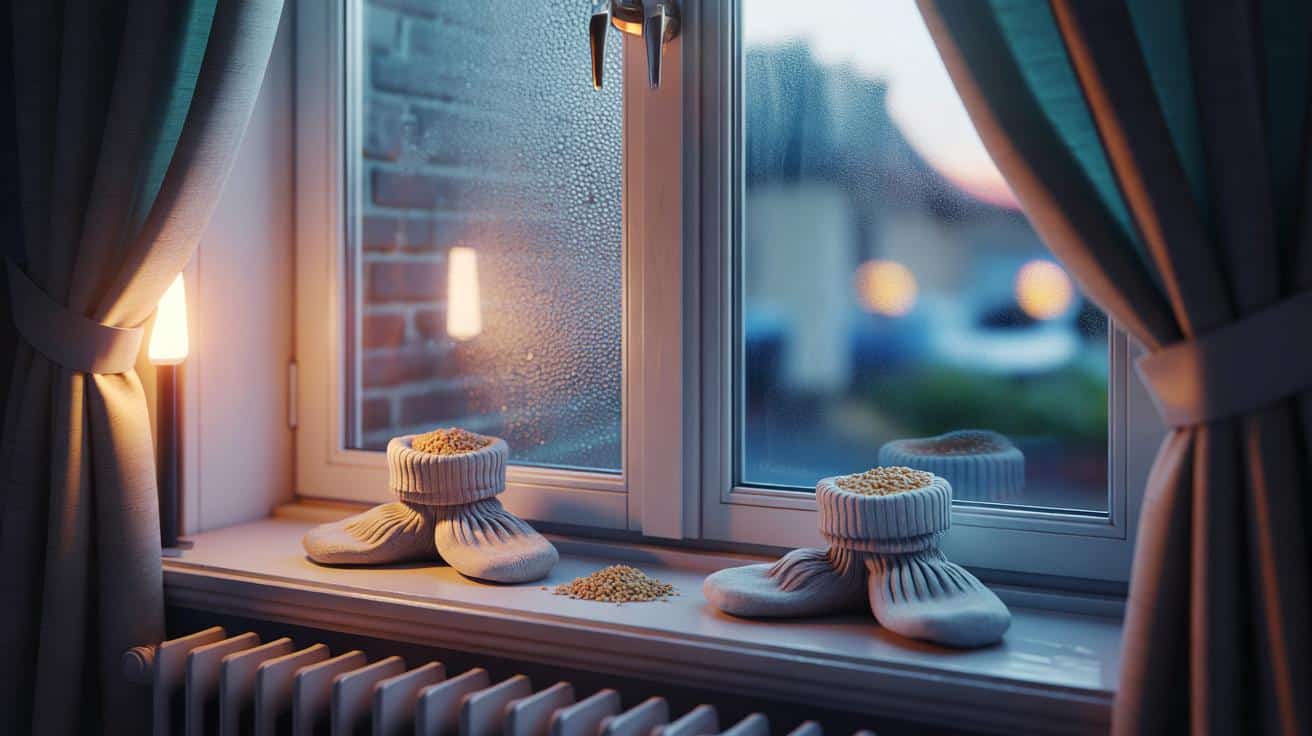
I woke to the soft hiss of the radiator and the soft slap of a drip hitting paint. The glass was fogged, a silver blur where the streetlight tried to get in. Curtains, faintly musty. Sill, wet again. We’ve all had that moment when you run a finger through the condensation and feel slightly defeated.
I’d tried cracking the window, but the room turned into a fridge. I wiped. It came back. I blamed our old frames, then the weather, then our breathing. Then, one evening, I placed a ridiculously cheap item on the windowsill and went to bed. The next morning, the glass was clear.
It felt like cheating.
Why the windows weep at dawn
Night pulls the temperature down, the glass chills, and the air in your room bumps into a hard limit. Warm air holds more moisture; cool air can’t. That’s condensation’s whole trick. Your windows are simply where the day’s living meets the night’s cold.
A bedroom is a factory for vapour. Two sleepers breathe out hundreds of millilitres of water before sunrise, plus the leftovers from cooking, showers and drying laundry. Close the door, shut the trickle vents, and that moisture has nowhere to drift. By 5am, it’s queuing on the pane like commuters at a rainy bus stop.
The science has a name for the tipping point: the dew point. When the glass surface drops below it, vapour turns to liquid. Old single glazing and leaky seals exaggerate this. Even good double glazing can fog if you pile heavy curtains tight against it, trapping moist air in a still, chilly pocket. The result looks like a window crying.
The £2 windowsill fix
The thing that stopped my panes from crying was this: a sock filled with **cat litter**. Two, actually — one on each corner of the sill. I used unscented, non-clumping litter, tied the tops, and laid them flat so the surface area caught more air. Cost: about £2 for enough to make four.
It’s a simple desiccant hack. The granules pull moisture from the air right where it gathers, before it condenses on the glass. I leave the socks out overnight and pop them on a warm radiator for an hour every few days to refresh. When they feel heavy and less effective, I replace the filling. If you don’t have cat litter, coarse salt in a shallow dish works in a pinch, though it’s slower.
There are a few easy wins that help the socks do their best. Keep curtains slightly off the glass so air moves. Leave trickle vents open. Crack the door a touch if the hallway is dry. Let’s be honest: no one wipes their windows every single night, and you don’t need to if the sill is quietly working for you.
What I learned in a week of dry panes
First, it wasn’t just the windows. The room felt less clammy by day, and the faint sour smell that clings to damp curtains faded. That was the surprise: stopping condensation isn’t only about glass, it’s about the whole microclimate of a room.
Second, small changes stack up. I moved a houseplant away from the radiator, shifted laundry drying to the spare room with the window ajar for an hour, and kept the bathroom door shut during showers. The cat litter did the heavy lifting. Those tiny tweaks gave it less to fight.
Third, mould loses ground when moisture can’t settle. A week in, the black freckles on the sill stopped spreading. I cleaned them with a mild detergent and let the area dry in sunlight. No return. That’s the part you feel in your shoulders when you wake up: less dread, more ease.
How to do the windowsill trick, step by step
Grab a clean cotton sock and a cup of unscented cat litter. Fill the sock halfway, tie a firm knot, then flatten it into a little pillow. Make two per window and place them at each end of the sill so they don’t touch the wet glass. That’s it. If the sill is narrow, use a small ramekin with a perforated lid instead.
Refresh the socks every few days. If they’re heavy or damp to the touch, warm them on a low radiator for an hour to drive off moisture, or spread them on a tray in a low oven for 15 minutes if you’re cooking anyway. Don’t microwave them. If you see salt-like crusting, replace the filling. Try a fresh batch at the start of each cold spell.
“You don’t need fancy gear to change the dew point dance at your window,” a building surveyor told me. “Get moisture out of the air, and the glass stops being a target.”
- Use unscented litter to avoid perfume residue on paint.
- Keep a 1–2 cm gap between curtain and glass for airflow.
- Pair with a 10-minute morning vent if the weather is dry.
- Wipe the sill once a week to remove any dust from granules.
Common mistakes, and kinder fixes
Don’t jam heavy blackout curtains flush to the pane. They create a cold, stagnant pocket and invite water to settle. Pull them a finger’s width forward, or clip them back slightly. It looks minor. It works.
Don’t rely only on heating. Warmth masks the issue, then the minute the radiator clicks off, the glass chills and the moisture returns. Think balance: a little heat, a steady trickle of fresh air, and a **cheap windowsill desiccant** catching the rest.
Don’t scrub mould with harsh bleach if the paint is delicate. A gentle detergent wash, dry, then repaint with a mould-resistant emulsion if needed. If the spots keep returning behind furniture, slide the piece forward a palm’s width so air can pass. It’s not a show home. It’s a home.
What about gadgets and “proper” fixes?
Yes, a powered dehumidifier works brilliantly, especially in small flats or rooms where laundry dries. They cost more up front and hum away, which some people love and others don’t. The sock-on-sill trick isn’t a rival. It’s the quiet partner that keeps going when you’re asleep or out, with no switches to forget.
If your frames are rotten, or double glazing has failed with mist between panes, that’s a different story. No sock can fix a broken seal. For most of us, the issue isn’t catastrophe — it’s daily moisture habits and a cold strip of glass. That’s exactly where the litter trick shines.
If you want to go a step further, look at the daily rhythm of your home. Shower with the fan running and the door closed. Cook with lids on. Open the bedroom for ten minutes after getting up when outside air is drier, then close it again to keep warmth. Tiny, doable things. The kind you’ll actually stick to.
What stays with you after trying it
It’s odd how a small, unglamorous hack can shift the mood of a room. Clear glass makes mornings feel clearer. The ritual becomes almost nothing: plop the socks on the sill, tug the curtains an inch forward, sleep. The drama of week-old damp just fizzles out.
There’s also something quietly democratic about it. No need for new windows, no need for a kit you’ll use twice and forget. Just a bag of granules and a bit of attention at bedtime. Friends tried it and texted me pictures of dry panes like proud parents.
If you try it, you’ll probably start noticing the other small levers around you — vents, gaps, habits — and you’ll set them just-so without thinking much. Not perfect. Just better. And better, night after night, is a lovely thing to wake up to.
| Point clé | Détail | Intérêt pour le lecteur |
|---|---|---|
| Cheap windowsill desiccant | Sock filled with unscented cat litter; two per window | Stops overnight condensation without chilling the room |
| Placement and refresh | Lay flat at each end of the sill; re-dry or refill every few days | Keeps the hack effective with minimal effort |
| Supportive habits | Gap the curtains, use trickle vents, short morning vent | Reduces mould risk and that damp-room smell |
FAQ :
- Does any cat litter work?Unscented non-clumping litter is the neatest. Clay works, silica crystals absorb faster but cost more. Avoid perfumed types that can leave a residue.
- How long before I notice a difference?One night. You’ll usually wake to clearer glass the first morning, and a drier sill within a few days.
- Will this damage paint or frames?Not if you keep the sock off the wet glass and wipe the sill weekly. Use a ramekin if your paint is delicate.
- What if condensation is inside double glazing?That means a failed seal between panes. The sock trick won’t fix it; you’ll need repair or replacement glass.
- Any alternative to cat litter?Coarse rock salt or baking soda in a shallow dish can help. Purpose-made moisture traps are still cheap and tidy, with refill tablets.








Tried it — clear panes by 7am. Cheers!