
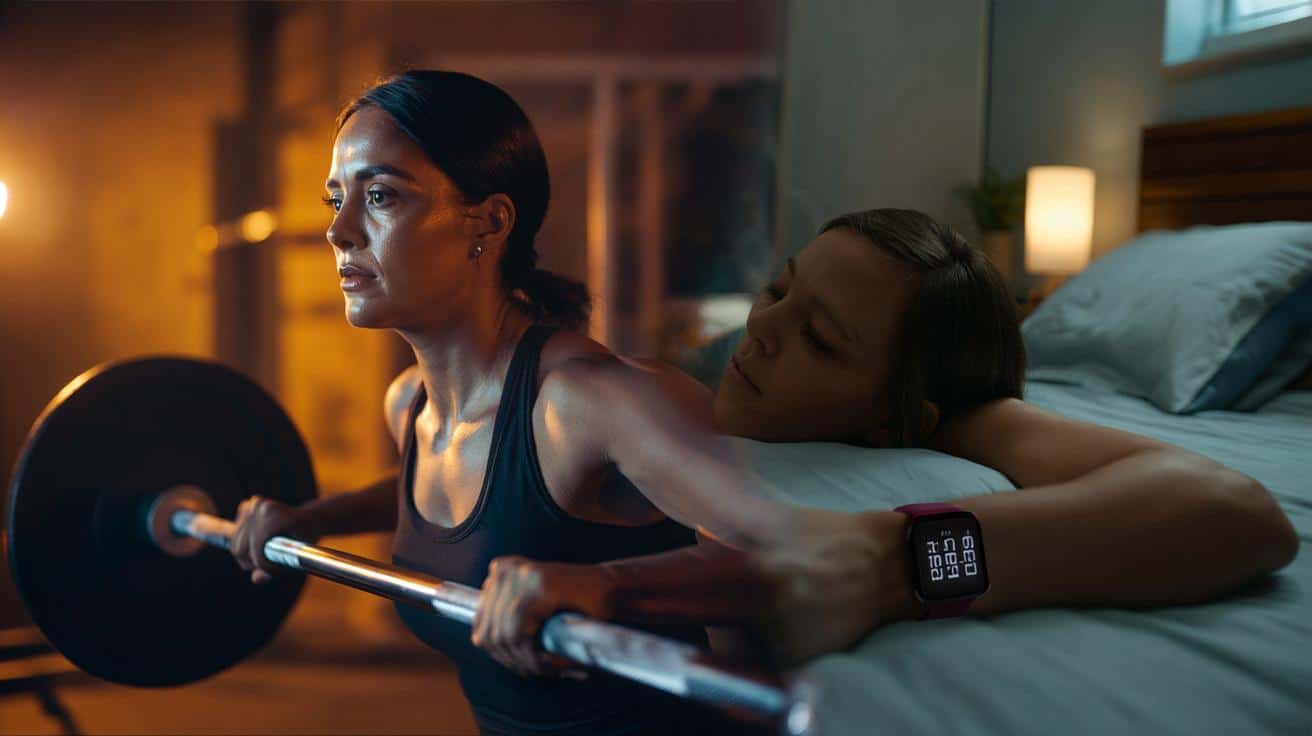
The fix might be hiding in your workout — not your pillow.
The gym was half-empty and humming, the kind of dim weeknight when people move slower and the mirrors feel too honest. I watched a man in an old football top grind through heavy squats, then leave with that wobbly, satisfied walk; he looked spent in the best way. On the bus home, two teenagers debated whether running at night “messes your head” or “knocks you out cold”. Later, I lay in bed remembering my own patchy nights. The restless turning. The ceiling counting back at me.
Then came a week I swapped my usual jogs for weights. I didn’t expect a miracle. Yet the change was obvious: fewer wake-ups, a heavier drift into sleep, a morning that felt less foggy. The clue was in the weight room.
The workout that quietly knocks you out
Across studies, one type of exercise keeps popping up as the strongest nudge for deeper, more efficient sleep: **strength training**. Not a bodybuilding epic. Simple, regular resistance work. Think squats, presses, rows, deadlifts with sensible loads. People report falling asleep faster and waking less at night. It’s not glamorous, which might be why it’s been hiding in plain sight.
We’ve all had that moment when the clock hits 3:11 a.m. and your brain starts narrating your life. In a year-long trial shared at a major heart health conference, adults who lifted weights improved key sleep markers more than those who only did cardio. They spent less time awake after first nodding off and gained more minutes of actual sleep. One woman I met, 43, swapped two runs for two strength sessions a week. Within a month, her smartwatch showed steadier nights and her face looked less “Monday”. She swore it wasn’t magic. Just reps.
Why would iron help your pillow? Part of it is biological. Lifting creates tiny muscle repairs that demand recovery; your body responds by turning up slow‑wave sleep, the deep stage that restores you. There’s also a temperature dance: you heat up during a session, then cool off over the next hours, which lines up with your natural sleep drive. And there’s a brain effect. Focused, technical effort can quiet the mental fizz. Less mental pinging, more drift. That’s a fair trade.
How to use strength training for better sleep
Start with two or three sessions a week. Choose 6–8 moves that cover the big patterns: squat, hinge, push, pull, lunge, carry. Do 2–3 sets of 6–12 reps at a moderate effort, where the last two reps feel earned, not frantic. Leave a little in the tank. Finish training at least two hours before bed to let your body cool and your **circadian wind-down** begin. A five‑minute stretch and three slow nasal breaths per exhale at the end act like a soft landing.
Common traps are sneaky. Hammering high-intensity circuits late at night can leave your nervous system buzzing. Pre-workout caffeine after 3 p.m. can linger longer than you think. Blue‑white gym lighting followed by a bright phone keeps your brain on “daytime”. Don’t chase personal bests at 9 p.m. on a Tuesday. And don’t expect one session to fix a month of poor sleep. Let’s be honest: no one really does this every day. Aim for rhythm, not perfection.
There’s reassurance here for the anxious sleeper. You don’t need a new mattress to change the story your nights tell. You need a plan you can repeat when life is messy. My eyelids finally gave up.
“Resistance work appears to have a unique edge for sleep efficiency. It’s not just about getting tired — it’s about the kind of tired your brain recognises as ‘safe to switch off’.”
- Two to three strength days per week beat sporadic heroics.
- Wrap sessions two to three hours before lights-out.
- Keep last sets challenging, not chaotic; quality over sweat puddles.
- Dim screens and rooms after the gym; let your body cool.
- Pair with a simple wind-down: a warm shower, low light, quiet breath.
What it means for the rest of your routine
Cardio still matters for your heart, your mood, your life expectancy. Yoga, walking, swimming — they all help. The point isn’t to ditch movement you love. It’s to adjust the mix if sleep is the missing piece. Slot in strength as a pillar, not an afterthought. If evenings are your only window, keep it steady and finish with calm. If mornings work, enjoy the easy daytime energy. Ask yourself which form of training leaves you pleasantly heavy in the sheets. That answer is worth chasing.
| Point clé | Détail | Intérêt pour le lecteur |
|---|---|---|
| Strength training leads | Research shows it improves **sleep efficiency** more than cardio alone | Choose the routine most likely to deliver deeper, steadier nights |
| Timing matters | Finish lifting 2–3 hours before bed; add a short cool‑down and dim light | Turn effort into sleep rather than late‑night restlessness |
| Keep it simple | 2–3 weekly sessions, 6–8 basic moves, moderate loads, repeatable plan | Build a habit you can keep on busy weeks and still sleep well |
FAQ :
- Does cardio hurt sleep?Not at all. Aerobic exercise helps sleep too, especially for stress and mood. Strength work just shows a stronger effect on sleep efficiency in several studies.
- Is evening lifting a bad idea?Not by default. Train earlier in the evening, keep intensity controlled, and give yourself a wind‑down. Many people sleep well after a 6–7 p.m. session.
- How heavy should I lift for sleep benefits?Moderate loads work well: finish each set with 1–3 reps “in reserve”. You don’t need max lifts for your brain to switch off.
- What if I’m new to weights?Start with bodyweight and machines, learn form, progress slowly. A 20–30 minute routine still counts.
- Can I combine cardio and strength?Yes. If sleep is your priority, keep two focused strength days and add easy cardio on other days. Balance beats extremes.






This matches my own nights—swapped some runs for deadlifts and slept deeper, fewer wake-ups. Love the simple template (6–8 moves, 2–3 sets) and the “finish 2–3 hours before bed” cue. Bookmarked. 🙂
Compelling, but can you cite the year‑long trial? Were sleep outcomes from polysomnography or consumer wearables? Any control for training status, caffeine, and late‑night light exposure? Otherwise the cardio vs strength conclusion feels a bit wobbly.